NJ Homeowners Spring Tree Check Tips & Essentials Now
Key Takeaways
- Catch problems early and save money — Many costly tree emergencies start as small warning signs that homeowners miss during winter cleanup.
- Spring pruning isn’t always safe — Pruning certain NJ tree species too early can cause long-term damage or attract disease and pests.
- Trees near structures should be a priority — A leaning tree or cracked trunk within falling distance of your home, driveway, or power lines is a liability risk, not just a landscaping problem.
- Trimming and removal aren’t the same — Many trees that are marked for removal can actually be saved with the right pruning approach, but timing is critical.
- A professional spring inspection can find what you can’t — Keep reading to find out exactly what arborists look for and when you really need one.
Spring Tree Check: Essential Tips & What NJ Homeowners Need to Know Now
Spring in New Jersey comes quickly — and so do the problems that hide in your trees after a long winter.
Once the leaves are fully grown, it becomes increasingly difficult to spot early signs of disease, structural failure, or vulnerability to storms. The period between late winter dormancy and full spring bloom is truly the best time to assess your trees. Unfortunately, most homeowners completely overlook this. Sage Tree Experts works with NJ homeowners throughout this exact season to catch problems before they become emergencies. The difference between an early call and a late one can often be measured in thousands of dollars.
What You Should Do Now That Your Trees Have Awakened
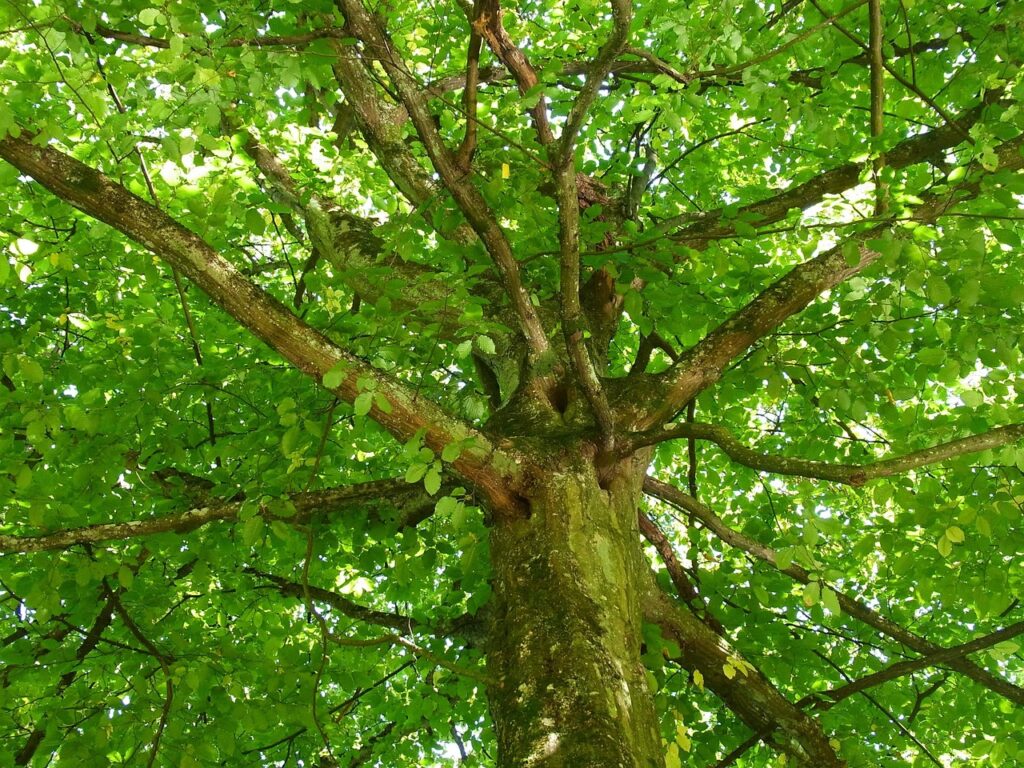
Mid-spring isn’t just the ideal time for planting and mulching. It’s the best time of year to assess the health of your trees. As new growth emerges, any tree that is in trouble will show clear signs: late budding, a patchy canopy, unusual changes in the bark, or branches that never revive. These aren’t just aesthetic problems. They are structural and biological warnings.
Begin by taking a leisurely stroll around each major tree on your property. You should focus on four main aspects: the canopy, the trunk, the root zone, and the overall lean. You don’t have to be a tree expert to spot an issue — you just need to know what to look for.
Indications Your Tree Might Be a Hazard
- Big dead branches or branches hanging in the canopy
- Visible splits, seams, or cracks along the trunk
- A lean that developed recently or after a storm
- Leaf growth that is sparse, patchy, or significantly delayed
- Soft wood, fungal growth, or cavities at the tree’s base
- Roots that are pulling away from the soil or heaving out of the ground
- Bark that is missing entirely or peeling in big sections
If you notice any one of these signs, you should take a closer look. If you see two or more of these signs — especially if the tree is near a structure — you should not wait.
Many of the most hazardous trees can appear to be perfectly healthy from afar. A tree can be significantly decayed on the inside while still sprouting leaves in the spring. This is why a ground-level visual inspection is just the beginning, not the end.
1. Big Dead or Dangling Branches
Tree surgeons refer to them as widow makers for good reason. Dead branches — particularly those still clinging to the tree after a winter storm — can fall without any notice, and even a medium-sized branch can cause serious harm or damage to buildings. In the spring, these branches are easier to spot because the healthy growth around them begins to leaf while they remain bare. If you notice a branch that has not budded by late April or early May in NJ, assume it’s dead until shown otherwise.
2. Obvious Cracks or Splits in the Trunk
When you see vertical cracks running along the trunk or splits where two major limbs diverge, you’re seeing signs of structural weakness that won’t repair themselves. These often develop from freeze-thaw cycles over winter and can widen under the stress of spring wind and new leaf weight. A co-dominant stem — where a tree has two main trunks growing in a tight V-shape — is a particularly high-risk configuration that professional pruning can sometimes correct if caught early enough.
3. Unusual Tree Leaning
It’s normal for some trees to lean and remain stable for many years — this is typically not an issue. However, what you should look out for is a new or worsening lean, particularly one that is accompanied by soil lifting or cracking at the base. This could be a sign of root failure, which is one of the quickest progressing structural problems a tree can experience. When the root system is compromised, the likelihood of complete failure significantly increases with any substantial wind event.
4. Sparse or Delayed Leaf Growth
If a tree that was lush and vibrant last summer is now producing noticeably fewer leaves this spring — or leafing out weeks later than neighboring trees of the same species — that is a cause for concern. Sparse canopy growth can indicate root damage, disease, soil compaction, or girdling roots that are cutting off the tree’s vascular system. It is one of the earliest visible signs that a tree is under significant stress, and it is easy to overlook as a late bloomer until the problem becomes irreversible.
Pay Extra Attention to Trees Close to Your Home, Driveway, or Power Lines
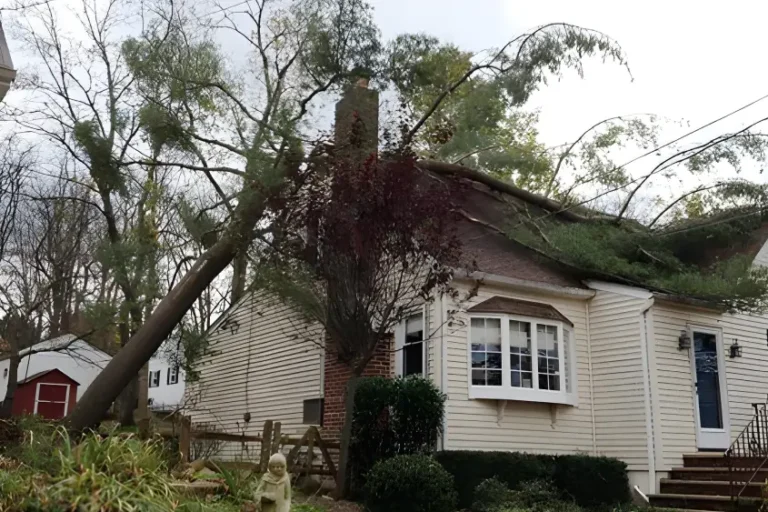
The location of a tree can significantly impact the risk it poses. A damaged tree in the middle of a yard is not as dangerous as the same tree situated over your roof, near a power line, or directly above your driveway where cars and people frequently pass. The closer a tree is to a structure, the more urgent and consequential a potential failure becomes.
What’s the Safe Distance?
Arborists often suggest that any tree with a trunk within 15 feet of a building — or with branches that overhang a roof, driveway, or power line — needs to be checked every year. This becomes particularly crucial in the spring, after the harsh New Jersey winter. The weight of ice, freeze-thaw damage to the trunk, and root stress from waterlogged soil can all make a tree that was already at risk genuinely hazardous by the time April comes around.
What to Do When a Tree Falls on Your Property
Many NJ homeowners are surprised to find out that if a tree from their yard falls and damages their home, their homeowner’s insurance may cover the structural damage, but not the entire cost of removing the tree. The amount covered can vary based on your policy and whether or not you were negligent. If you knew the tree was dead or visibly damaged and did nothing, you may be held liable.
In New Jersey, if a tree from your neighbor’s yard falls onto your property, the law generally states that your neighbor is only responsible if they were previously informed of a risk and did not take action. That’s why it’s important to have written records, and why a professional inspection report can be very helpful, both for your own records and as proof in case of a dispute. The main point is: don’t wait for a tree to fall before you start asking these questions.
Defining Trimming, Pruning, and Removal: What Does Your Tree Really Need?
Trimming, pruning, and removal are terms that are often used interchangeably, but they are not the same. Each has a different meaning and can have a different impact on the long-term health of your tree. Knowing the differences between these terms can help you communicate more effectively with any tree service you hire. It can also help you advocate for your tree if someone suggests removal when pruning would be sufficient.
The Benefits of Pruning
Pruning can be seen as a method of selectively removing certain branches from a tree to improve its structure, redirect its growth, eliminate any diseases, and reduce the weight load on any vulnerable branches. When done correctly, it can significantly prolong the life of a tree. A tree that has one or two dead branches, a co-dominant stem, or early signs of canopy dieback is often a great candidate for structural pruning rather than removal. The emphasis here is on the word selective — strategic cuts that follow the branch collar and do not leave large open wounds that invite decay.
It’s especially helpful to use crown reduction pruning, which reduces the overall size of the tree’s canopy by cutting back to the side branches, for trees that have grown into power lines or over the tops of houses. This isn’t the same as topping, a harmful practice that’s widely criticized for leaving large, flat cuts and causing quick regrowth that’s weakly attached. If anyone suggests topping your tree, it’s a sign that they may not be qualified.
How to Tell If a Tree Is Too Far Gone
There are times when a tree has been so damaged that it can’t be saved by pruning. If more than half of the tree’s canopy is dead or seriously damaged, if the trunk is hollow in many places or if there is advanced decay at the base, or if the root system has been structurally compromised, it’s usually best to remove the tree. A tree that is in terminal decline won’t get better on its own — it will continue to get worse, and the danger it poses will increase with each passing season.
Why Timing is Crucial for Spring Pruning
When you decide to prune your tree in the spring isn’t just about when it’s most convenient for you. It also has a significant impact on how the tree will react and whether or not you’ll unintentionally cause more issues. In New Jersey, the spring season has different stages, and the stage your tree is in its growth cycle when you prune it can have serious effects.
The best time for structural pruning in NJ is from late February through mid-March, which is considered late winter through early spring. At this time, trees are still dormant, so wounds from pruning will heal more efficiently when the tree starts to grow again. Plus, without leaves, it’s easier to see the structure of the tree’s branches. Once the tree has fully leafed out, pruning can stress the tree and it’s more difficult to assess the structure of the tree because of the dense canopy.
You can still prune your trees in mid-spring to get rid of dead wood, branches that are crossing each other, or limbs that pose a risk — you don’t need to wait for the perfect time of year to do these tasks. However, try not to make large structural cuts on a tree that is already growing rapidly. This interrupts the energy the tree has put into producing new leaves, and it will take the tree longer to recover.
Spring Isn’t the Time to Prune These Trees
Despite the general rule of thumb that spring is the best time for pruning, there are several tree species common to New Jersey that do not follow this rule. Oak trees should not be pruned from April through July because of the increased risk of Oak Wilt, a fungal disease that is spread by sap beetles, which are most active during these months. Elm trees also have a specific pruning window due to the risk of Dutch Elm Disease. Flowering trees such as dogwood, cherry, and magnolia should be pruned right after they bloom — if you prune them before they bloom, you’ll cut off the flower buds you’ve been waiting all winter to see. Maple and birch trees have a heavy sap flow in early spring, and pruning them during this time can lead to excessive bleeding, which, although not deadly, can be stressful and messy.
Optimal Time for Spring Tree Maintenance in New Jersey
Most NJ shade trees, excluding oak during the high-risk period and sap-heavy species like maple until late spring, have a prime time from late March to mid-April. This is when buds are just starting to swell but before leaves fully emerge. This period allows you to see a bare canopy, heal wounds before growth starts, and gives you enough time to deal with hazards before the first major spring storm system comes through the area. If you missed that time, late fall after the leaves have fallen is your next best chance for structural work. However, you can and should remove dead wood and hazards at any time of year.
Save Your Home From Expensive Storm Damage With A Tree Inspection
Spring storms in New Jersey can be brutal. Whether it’s a nor’easter that extends into April, a quick thunderstorm in May, or an unexpected early wind event, a damaged tree doesn’t have much time to recover. The difference between a tree that makes it through the season and one that falls on your house often depends on whether it was inspected before the first major storm hit.
What to Expect from a Spring Tree Inspection by a Professional:
Canopy Assessment — Identifying branches that are dead, dying, or structurally weak and pose a drop risk
Trunk Evaluation — Checking for abnormalities such as cracks, cavities, seams, soft wood, fungal growth, and bark
Root Zone Inspection — Looking for signs of root rot at the base, heaving soil, girdling roots, or erosion
Lean and Stability Check — Assessing whether any lean is historic and stable or new and progressive
Proximity Risk Review — Evaluating the consequence zone: structures, power lines, driveways, and high-traffic areas
Species-Specific Timing Advice — Recommending the right pruning or removal window based on your specific tree species
Most professional inspections take between 30 minutes and an hour depending on the number of trees and property size. What you get out of it is a clear, prioritized picture of what needs attention now, what can wait until fall, and what is perfectly healthy and requires nothing at all. That kind of clarity is worth more than most homeowners expect — especially when storm season is weeks away.
It’s almost always more expensive to do nothing than to act early. Emergency tree removal after a storm can cost two to three times as much as a planned removal because it often involves crane work, hazard premiums, and rushed scheduling. A single inspection that identifies one hazardous tree can pay for itself before you even get your first bill.
Common Questions
Homeowners often have a lot of questions about their trees once spring rolls around. The questions below are the ones that we hear the most often, and the answers might surprise you.
Knowing when a tree needs a little TLC or when it needs to be removed can be a bit tricky. Here are the top things NJ homeowners need to know as we head into the spring tree season:
- Distinguishing between a dead tree and a tree that is slow to leaf
- Understanding when it is safe to prune a tree yourself
- Identifying New Jersey tree species that have restrictions on spring pruning
- Knowing what your homeowner’s insurance covers if a tree falls
- Getting a sense of how long a professional tree inspection should take
The answers to these questions will determine whether you are proactive or reactive this spring. The information below will help you make informed decisions about every tree in your yard.
How can I tell if my tree is dead or just late to bloom in the spring?
The most dependable technique available to homeowners is the scratch test. Use a fingernail or a small knife to scrape a small piece of bark on a young twig near the end of a branch. If the layer beneath is green and slightly damp, the branch is alive. If it is dry, brown, and brittle all the way through, that branch is dead. Continue down larger and larger branches using the same test. If the trunk itself does not show a green cambium layer anywhere, the tree is dead. A tree that is just late to bloom will show green under the bark even before any buds appear externally — that is your proof that it is still alive and simply running late.
Can I prune trees myself or should I always hire a professional?
Homeowners can usually handle light pruning of small branches — anything under two inches in diameter that you can reach safely from the ground — with the right tools and basic technique. The most important rules are: cut just outside the branch collar, never leave a stub, and make clean cuts with sharp equipment to minimize wound size. DIY pruning can go wrong when homeowners go higher than they should, cut larger limbs without understanding how to control the drop, or make cuts in the wrong location that damage the trunk. Anything above ground level that requires a ladder, involves branches larger than a few inches, or is near a structure or power line is a job for a licensed professional. The risk of injury and property damage in those scenarios is too high to justify the cost savings.
Which trees in New Jersey should you avoid pruning in the spring?
The most critical tree to note is the oak tree. In New Jersey, pruning oaks between April and July poses a genuine risk of transmitting Oak Wilt — a fungal disease spread by sap beetles that are actively searching for food during this period. These beetles are drawn to fresh pruning cuts, and the infection can quickly spread through connected root systems to nearby oaks. The New Jersey Forest Service and most certified arborists suggest limiting oak pruning to late fall and winter whenever feasible.
Not only oaks, but elm trees also share a similar concern with Dutch Elm Disease during active beetle season. Maple and birch trees pruned in early spring will bleed sap heavily — it is not life-threatening to the tree, but it is stressful and can be avoided by waiting until late spring or early summer when sap pressure drops. Flowering ornamentals like cherry, dogwood, and magnolia should be pruned after they bloom, not before — spring pruning before bloom simply removes the flower buds the tree spent all winter developing.
Will my homeowners insurance cover tree damage or removal in NJ?
It really depends on the situation, and the details matter a lot. In most standard New Jersey homeowners insurance policies, if a tree falls and damages an insured structure — like your home, a detached garage, or a fence — the structural repair is typically covered after your deductible. The removal of the tree itself is often covered up to a sub-limit, usually between $500 and $1,000 per tree, which rarely covers the full cost of removal, especially if equipment is needed.
Insurance can become a bit tricky when a tree that has been visibly dead, diseased, or has been previously marked as a hazard and the homeowner has not taken any action. In these cases, insurance companies may claim negligence and reduce or deny the claim. If a tree from your neighbor’s property falls onto your property, they are only liable if they had prior written notice of the hazard. This is why some homeowners send formal letters when they are worried about trees on neighboring properties. Always review your specific policy and speak with your insurance company before assuming you are covered for any specific scenario.
What is the duration of a professional spring tree inspection?
For an average residential property with five to ten trees, a detailed professional inspection takes about 45 minutes to one hour. Bigger properties with mature tree canopies, complex root zones, or trees in close proximity to structures will take longer — sometimes up to two hours for a complete assessment.
During this time, the arborist isn’t just walking around and looking up. A proper inspection involves a detailed examination of the trunk from various angles, searching for soft wood or cavities, assessing the root flare at ground level, checking branch unions for included bark, and assessing canopy density and symmetry in relation to the species’ expected growth pattern. They are also taking note of the proximity to structures and considering the consequence zone if any given tree were to fail.
Upon inspection, anticipate receiving a concise verbal summary on the spot. A reliable company will then provide written notes or a straightforward report detailing priority concerns, suggested actions, and recommended timing. This documentation is not only beneficial for planning your spring yard work, but it also serves as a record that shows due diligence. This can be crucial for insurance purposes and maintaining good relations with your neighbors if a tree dispute ever arises.