
How Do I Know If a Tree in My Yard Is Dangerous?
- Even if a tree looks healthy on the outside, it could still be structurally unsound — internal decay, root failure, and hidden cracks are among the most dangerous conditions because they give no obvious warning.
- Dead wood, fungal growth, and vertical trunk cracks are the most obvious warning signs that a tree may be close to failure and needs immediate attention.
- Location is as important as condition — a tree leaning toward your roof or power lines is a high-priority risk even if it appears otherwise healthy.
- Most homeowners overlook the early warning signs because they don’t know what to look for at the roots, inside the canopy, or beneath the bark surface.
- When in doubt, a certified arborist can assess what you can’t see — professional evaluations catch structural failures that no visual inspection from the ground will ever reveal.
Most homeowners don’t think about a tree being dangerous until a branch comes through the roof — and by then, the signs were probably there for months.
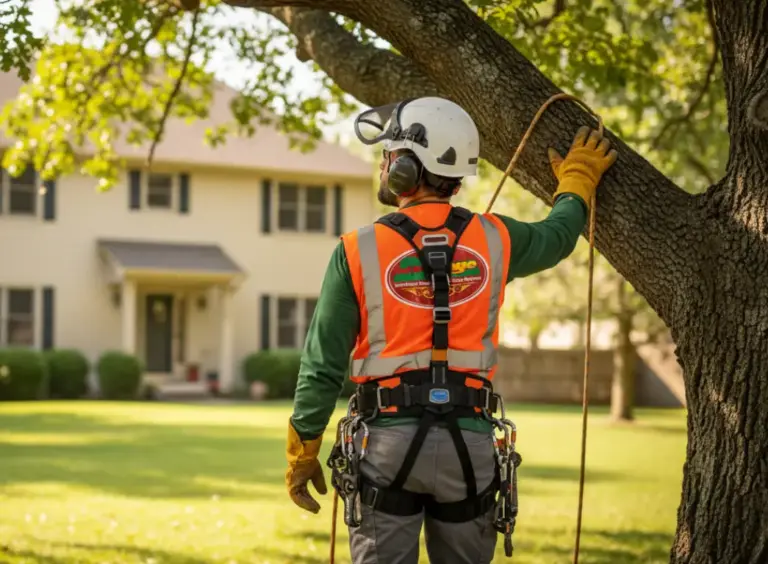
Identifying a tree’s warning signs doesn’t require a degree in forestry. It’s about recognizing a few physical signs that suggest that the oak in your backyard is a disaster waiting to happen. Sage Tree Experts, a certified arborist service based in Watchung, NJ, often works with homeowners who are surprised to discover that their “perfectly healthy” tree had been silently deteriorating for years.
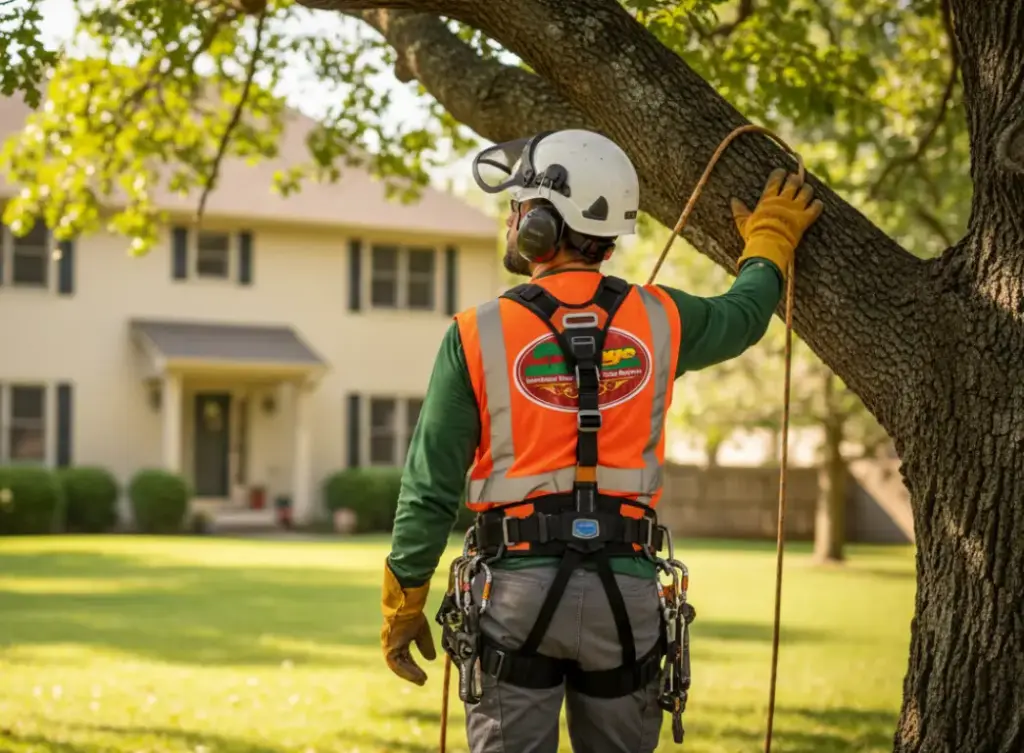
Could Your Tree Be Dangerous?
It’s a hard pill to swallow, but sometimes trees fail without any warning signs. A tree can stand tall and strong for years, even as decay is slowly eating away at its core. Then, on a calm day with no wind, it suddenly drops a massive limb. It’s not always possible to predict when a tree will fail, but it is often preventable. You just have to know what to look for before it happens.
There are three categories of risk in trees: structural (how the tree is built), biological (disease, decay, or pest damage), and situational (where the tree is and what’s beneath it). A tree that poses a danger usually has problems in at least one of these areas. The most dangerous trees have problems in all three.
Watch Out for Dead or Dying Wood
Dead wood is inflexible and can’t bend. This means that when a heavy, dead branch breaks, it falls quickly and straight down without any warning. Deadwood in the canopy is one of the top causes of property damage and injury related to trees. The hard part is identifying it before it falls on its own.
1. Branches Falling Without Wind
Healthy tree branches are flexible. They can bend under weight and then spring back into place. Dead branches, however, are brittle and can crack or fall under conditions that wouldn’t affect a healthy branch — like a light rain, the weight of a bird, or even just a change in temperature overnight. If you’ve noticed small dead branches frequently falling from one of your trees, that’s a sign that the larger branches above may also be dead. Don’t ignore these signs.
2. Bark Peeling or Falling Off
It’s common for trees such as sycamores and birches to shed their bark in strips naturally. However, if the bark on a tree that isn’t supposed to shed is peeling or falling off in chunks, it’s a sign that the cambium layer underneath — the living tissue just below the bark — is dead or dying. If the exposed wood underneath looks gray, dry, or discolored, it’s not healing. That part of the branch or trunk is dead.
3. Lack of Leaves Compared to Other Trees
This is a simple sign, but it’s often missed. If it’s the middle of summer and your oak or maple tree has sections without leaves while all the other trees in your yard are lush, those barren branches are dead. A tree that doesn’t sprout leaves at all during the growing season, sometimes referred to as a “sudden decline,” may have a root or vascular problem that’s more severe than what you can see in the tree’s canopy.
What the Trunk Can Tell You
The trunk is the tree’s main support system. If it has any structural issues — such as cracks, rot, hollowness, or fungus — the tree’s ability to stay upright under stress is significantly reduced. A strong gust of wind, heavy snow, or waterlogged soil can cause a structurally compromised trunk to fail in an instant.
By simply approaching a tree and placing your hands on it, you are already performing a rudimentary structural assessment. Here’s what you should be keeping a keen eye out for.
Vertical Cracks and Splits
Vertical cracks on a tree trunk that are deep and don’t close back up are cause for concern. These are known as shear cracks and they signify that the wood fibers inside the trunk have separated due to stress. This is different from normal surface checks which are shallow and just cosmetic.
If you can fit your fingers into a crack, if it is more than a foot long, or if it appears on multiple sides of the trunk at once, then you have a structural emergency. These cracks indicate that the trunk is splitting from the inside out, and it may not be able to handle the next big load.
What to look for: Slide your hand up and down the bark. Feel for raised areas, spaces, or indented lines. Check both the side of the trunk that is in the shade and the side that faces the sun — splits often form on the side that is exposed to the most weather.
Soft or Hollow Areas When You Tap on the Wood
Use your knuckle or a rubber hammer and tap solidly on the trunk at various heights. A solid, healthy trunk makes a thick thud. A hollow or rotten interior makes a noticeably different sound — a muted, echoing tap that lasts longer than it should. This simple test has been used by tree surgeons for years because it is effective.
When a tree’s heartwood is eaten away by fungal decay, it can cause the tree to become hollow from the inside. This can happen even if the tree’s outer shell remains intact. A tree can look perfectly healthy from the outside, but be more than half hollow on the inside. When a tree reaches this point, the remaining shell of wood is left to bear the entire structural load, and it will eventually give way.
Fungus and Mushrooms Growing at the Base
When you see mushrooms or shelf fungi (also known as conks) growing at the base of a tree or directly from the trunk, it’s not just unsightly — it’s a clear sign of internal wood decay. Fungal fruiting bodies only appear above ground after the underground mycelium has been eating away at the wood for months or years. By the time you see mushrooms, there’s already been significant internal damage.
Ganoderma species — the fungi that look like shelves and are usually found on hardwoods — are especially destructive. They target the root system and lower trunk, destroying the structural wood from the inside. A tree with active Ganoderma growth at its base has weakened structural integrity and should be immediately evaluated by a professional.
Root Issues Are Often Difficult to Detect
Roots perform the most important function in a tree, securing hundreds or thousands of pounds of wood against gravity and wind pressure, and they’re entirely concealed. Root failure is why trees topple over entirely instead of merely shedding branches, and it’s the type of failure that results in fatalities and home destruction.
Most of a tree’s root system is hidden from view, but the effects on the ground above it when something goes wrong are visible. These are the surface signs that indicate your tree’s foundation is in trouble.
Ground Rising or Bumpy Near the Bottom
If the earth near the bottom of your tree appears elevated, irregular, or as if something is thrusting upward from below — particularly on one side — that’s ground rising. It occurs when the anchor roots on the other side of the tree start to fail, causing the root plate to rotate upward as the tree leans. This is a late-stage warning sign. A tree showing ground rising is already in the process of uprooting and can complete that failure very quickly, especially after rain when the earth loses its grip.
A Newly Visible Lean
Just because a tree is leaning doesn’t mean it’s dangerous. Many trees lean slowly over time, reaching for the sun, and this becomes a part of their structure. What you should be concerned about is change. If a tree has started to lean, or if it’s leaning more than it was last season, this could mean that the roots are failing or that the soil is unstable.
When a tree begins to lean, it’s a clear sign that it may be dangerous. If it’s also displaying other signs such as heaving soil, fungal growth, or soft spots on the trunk, it’s time to call a professional for an assessment. This is especially important if the tree is leaning towards your home, garage, or power lines. In these cases, what may have started as a simple biological issue could quickly become a safety emergency.
When the Tree’s Location Makes It More Dangerous
Two trees with identical structural problems carry completely different levels of risk depending on what’s underneath them. A compromised tree in an open field is a low-priority concern. That same tree positioned over your bedroom, your child’s swing set, or a neighbor’s fence is a high-priority hazard. Arborists call this concept target assessment — the risk a tree poses is always evaluated in relation to what it would hit if it failed. High-value targets like occupied structures, vehicles, and utility lines automatically elevate any tree’s risk level, even when the tree itself appears relatively healthy.
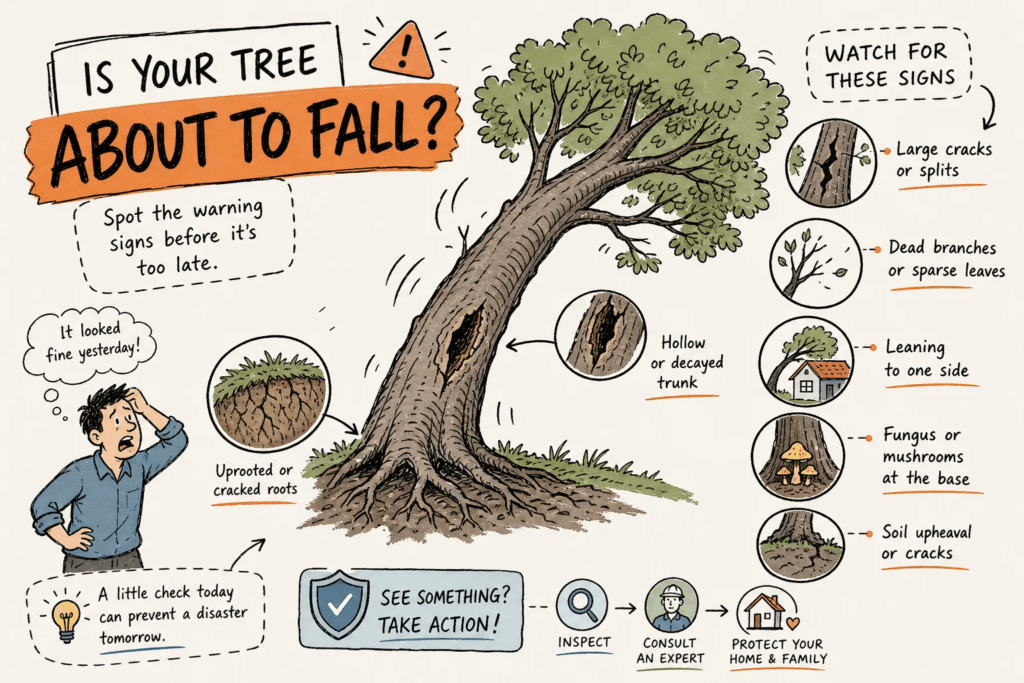
How to Perform a Preliminary Safety Inspection on Your Tree
You don’t need any special equipment to do a basic initial inspection of the trees in your yard. A systematic walk-around takes about ten minutes per tree and can identify most of the visible red flags discussed in this article. Do this at least twice a year — once in early spring before the leaves come in, and once in late fall after they fall off — when the tree’s structure is most visible.
1. Take a Stroll Around the Tree
Begin at the bottom and gradually work your way around the entire tree. Pay attention to the root flare — the point where the trunk and the ground meet — for signs of mushrooms, soil heaving, exposed or cut roots, and any spaces between the trunk and the ground. As you move up the trunk, keep an eye out for cracks, missing bark, cavities, and any unusual bulging or indented areas. Look for any construction, trenching, or soil compaction within the drip line, as root damage from nearby work is a frequently overlooked cause of tree decline.
2. Check the Canopy
Stand back so you can see the entire top of the tree. Look for branches that have no leaves when the rest of the tree is in full bloom, or that still have dead leaves when it’s past fall. Check for branches that are caught in other branches — these are called widow makers because they can fall without warning. Look at the overall shape of the top of the tree: if one side is significantly thinner than the other, or if there are large gaps where there used to be branches, the tree might have root or vascular problems.
Another thing you should look at is where the main branches connect to the trunk. Tight V-shaped connections between large co-dominant stems are known to be structurally weak. This is because bark can get trapped between the stems over time, which stops them from attaching to each other properly. These connections can split under the strain of wind or ice, so you should get an arborist to check them.
3. Inspect After Each Severe Storm
Storms don’t just create damage, they uncover it. High winds, heavy rain, and ice loading put a strain on a tree in ways that normal conditions don’t, and that strain reveals weaknesses that were already present. After any major weather event, walk around your property and check each large tree before you allow children to play outside or park vehicles under them again.
Pay special attention to branches that are newly cracked but still attached, hanging at an odd angle, fresh splits in the trunk or major limbs, any change in the tree’s lean compared to before the storm, and new soil disturbance around the root zone. A branch that survived the storm but is now hanging by a thread of bark is more dangerous than one that fell completely — it’s unpredictably positioned and can drop at any moment.
Consult a Certified Arborist Before Disaster Strikes
While this guide provides a good foundation for recognizing obvious hazards, the truth is that often you won’t be able to definitively determine whether your tree is dangerous without a professional assessment. Issues such as internal rot, root failure, and co-dominant stem weakness require a trained eye, specialized tools like resistograph drilling or sonic tomography, and years of practical experience to accurately evaluate.
A tree professional, known as a certified arborist, is specifically trained to assess the risk of a tree in your yard. This individual has been certified by the International Society of Arboriculture (ISA) and uses a structured framework to evaluate the tree. They look at the tree’s defects, the likelihood of the tree failing under different conditions, and what would happen if the tree were to fail based on what is in the target zone. This combination of factors is what produces a true risk rating, not just a hunch.
For those in northern New Jersey who may have noticed any of the warning signs mentioned in this article, Sage Tree Experts in Watchung, NJ provides professional tree risk assessments. Their ISA-certified arborists can give you a clear understanding of the situation you’re in — and what your options are before it escalates into a crisis.
Common Questions
Quick Summary: Signs of a Dangerous Tree to Look Out For
Sign to Look Out For Where to Check Danger Level Cracks in the trunk running vertically Main stem of the tree High Mushrooms growing at the base Soil surface and root flare High Trunk sounds hollow when knocked Various heights of the trunk High Soil is heaving on one side Area around the root zone High Tree is leaning more than before Full silhouette of the tree High Dead branches in the canopy Upper part of the crown Moderate to High Widow makers are hanging Mid to upper part of the canopy Moderate to High Bark is peeling on a species that shouldn’t Major limbs and trunk Moderate Branch unions are in a tight V shape Where the major limbs meet the trunk Moderate Canopy is sparse or missing Full view of the crown Moderate
Can a Tree Appear Healthy but Still Be Dangerous?
Yes — this is one of the most critical points to understand about the safety of trees. A tree can have a full, green canopy and still be structurally unsound at its core. Internal fungal decay can hollow out the heartwood while the outer sapwood and bark remain intact, making the tree appear completely healthy until it fails. This is why a visual inspection from the ground has serious limitations, and why a professional assessment using probing or acoustic tools can reveal issues that looking alone will not uncover.
How Quickly Can a Dangerous Tree Become a Safety Hazard?
There is a wide range of timelines depending on the type of issue. A tree that has been hit by lightning or significantly damaged in a storm can become an immediate danger within hours. Fungal rot and root decay usually progress over several years, but the actual structural failure — the moment the tree or limb falls — happens in seconds without any further warning. This is why early detection is so important: by the time the failure is noticeable, it’s already in progress.
Does a Leaning Tree Always Pose a Threat?
A tree that has gradually and naturally leaned towards the light is not always a threat — there are many trees that grow at an angle for their entire lives without ever falling over. The real cause for concern is a new lean or a lean that has noticeably increased over a short time, as this indicates that the roots are failing or the soil is unstable. Regardless of how long the tree has been leaning, if it is leaning towards a building, vehicle, or area with a lot of foot traffic, it should be professionally evaluated.
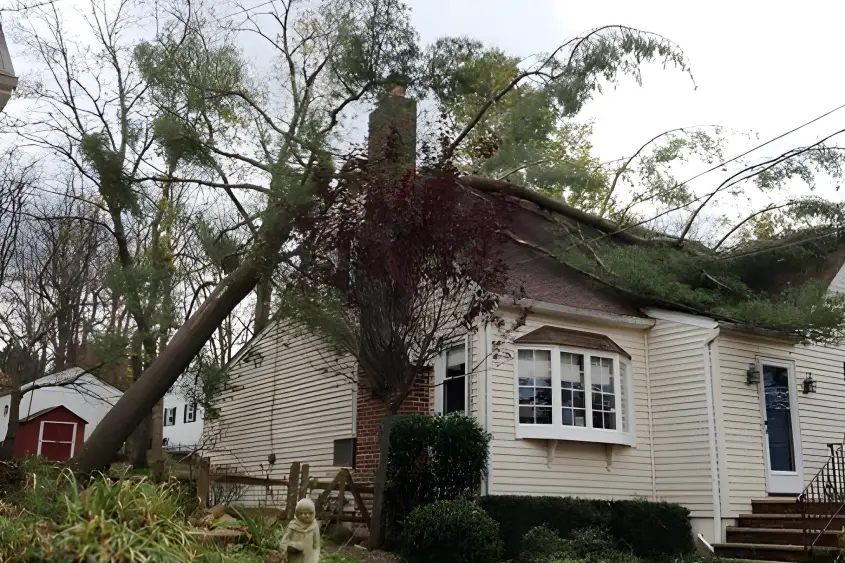
Who is Responsible if a Tree Falls and Causes Damage?
When it comes to tree-fall incidents, the property owner is usually held responsible based on what they knew — or should have reasonably known — about the tree’s condition. If a tree on your property was visibly sick, dead, or had clear signs of structural failure and you didn’t do anything about it, you could be considered negligent if it falls and damages a neighbor’s property or hurts someone.
There is a wide range of coverage for tree damage in homeowner’s insurance policies, and coverage is often denied when negligence can be proven. The bottom line is, if you’ve noticed warning signs on a tree near a property line or structure, document your actions. Get a professional assessment in writing and follow through on any recommended work. That paper trail matters if a claim is ever filed.
What Is the Cost of Removing a Hazardous Tree?
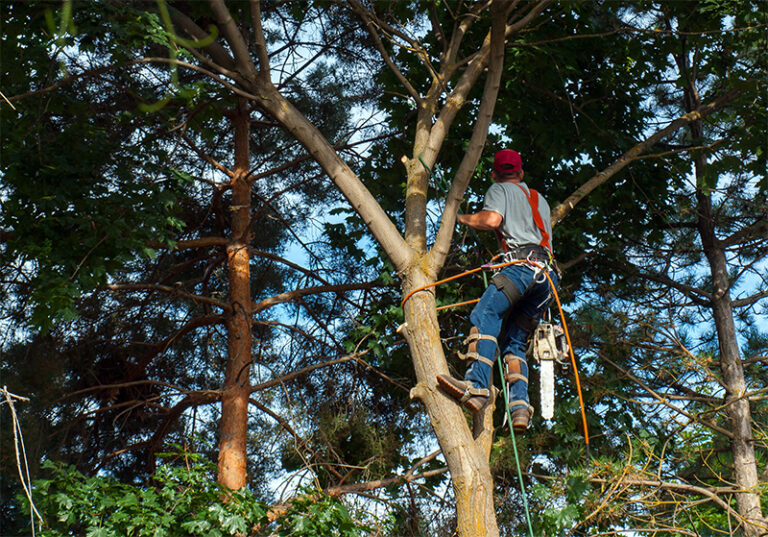
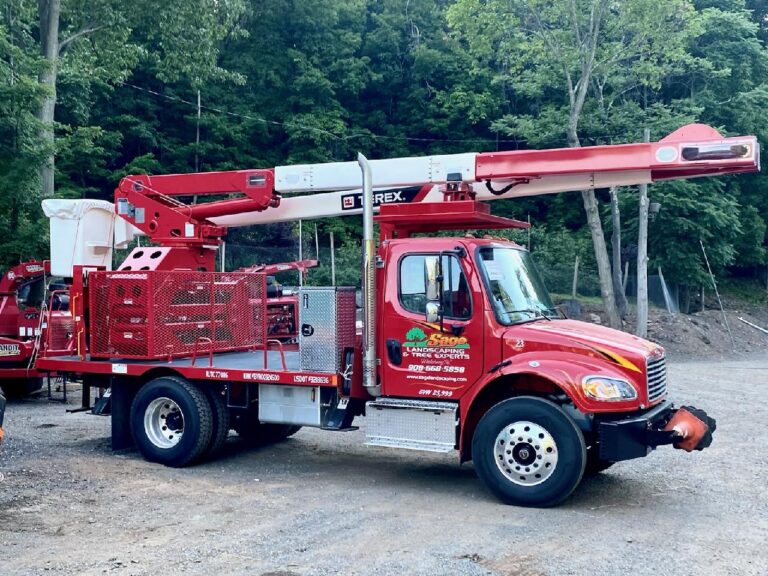
The cost of removing a tree is determined by factors such as the tree’s size, its proximity to buildings, and the complexity of the task. A simple removal of a small tree could cost a few hundred dollars, while removing a large hazardous tree near a house that requires rigging, sectional removal, and a crane could cost several thousand dollars.
General Tree Removal Cost Ranges
Tree Size Estimated Cost Range Complexity Factors Small (under 30 ft) $200 – $700 Open access, no structures nearby Medium (30–60 ft) $700 – $1,500 Some obstacles, moderate rigging needed Large (60–80 ft) $1,500 – $3,000 Near structures, sectional removal required Very Large (80+ ft) $3,000 – $6,000+ Crane required, high-risk positioning
These are general estimates, and actual quotes will depend on your specific location and the conditions of your property. Always get multiple quotes from licensed and insured tree care companies, and be cautious of bids that seem dramatically lower than others — in hazard tree work, price is rarely where you want to cut corners.
It’s also important to note that some homeowner’s insurance policies may cover the cost of removing a hazardous tree if it is deemed to be an immediate threat to an insured structure. Before you assume that the cost will be entirely out of pocket, contact your insurance provider. You may have coverage that you haven’t used.
Dealing with a potentially hazardous tree in your yard before it becomes a problem is always the smartest move. Not only will it save you money in the long run, but it will also keep your family safe. The cost of removing a tree is still much cheaper than the cost of repairing your home after a tree has fallen on it.

The market examples were particularly helpful.
TraderZO official