Is Stump Grinding Better Than Full Stump Removal for Your Yard?
When a tree comes down, the stump left behind quickly becomes the next problem to solve. So is stump grinding better than full stump removal for your yard? The honest answer is: it depends, and the distinction matters more than most homeowners realize. These two methods leave your yard in fundamentally different conditions underground, and choosing the wrong one can cost you time, money, and a replanting headache you didn’t see coming. The right choice depends on what you plan to do with that space, how close the stump is to structures or other trees, and whether any pest or disease risk is already in play. At Sage Tree Experts, our certified arborists work through this exact question on nearly every residential job in New Jersey, and the answer is rarely the same twice. Here’s how to think it through before you call anyone.
What each method actually does (and what it leaves behind)
The distinction between stump grinding and full stump removal isn’t about one being “more thorough” in some vague sense. It’s about what stays in the ground when the crew packs up and leaves. That distinction drives every other decision you’ll make about the site.
How stump grinding works
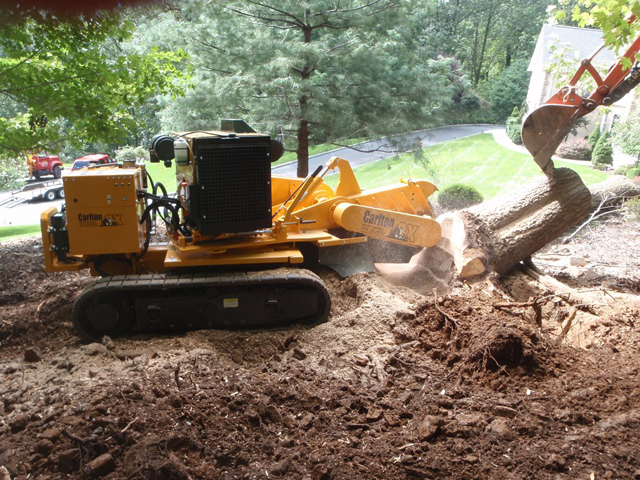
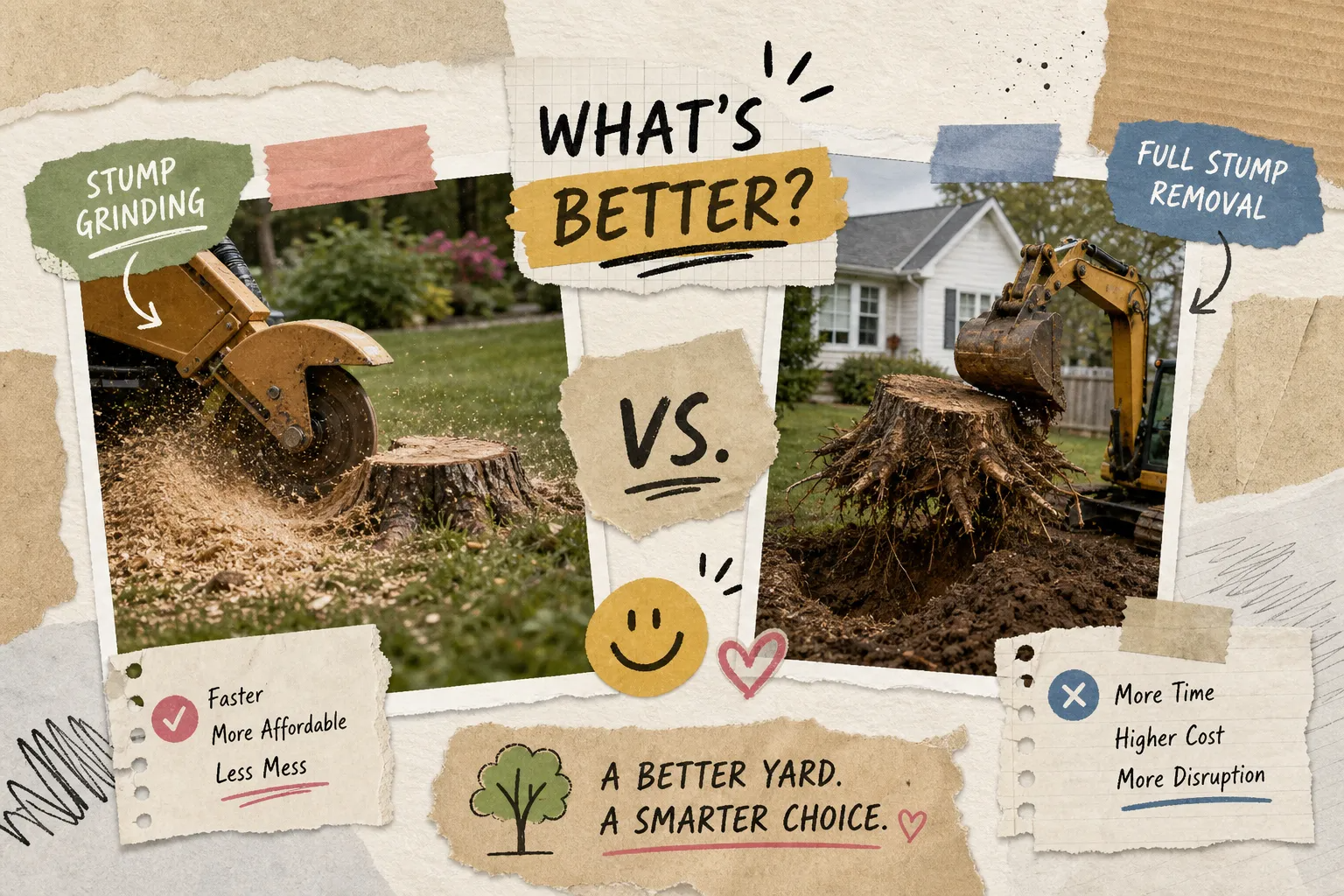
A stump grinding machine uses a rotating cutting wheel to reduce the visible stump to wood chips and sawdust, working down to several inches below the soil surface. The root system stays in the ground and decays on its own over time. What you’re left with is a filled-in area packed with wood chip mulch byproduct and a root mass underground that no one can see. Grinding is fast, targeted, and minimally invasive to the surrounding lawn and neighboring tree roots. For most residential situations, that’s a perfectly acceptable outcome.
What full stump excavation involves
Full stump removal goes deeper and wider. An excavator or heavy equipment digs out not just the visible stump but the root ball attached to it, leaving a hole that must be backfilled with quality soil. This is more labor-intensive, causes more surface disruption, and costs more. But it leaves a structurally predictable site underground, which matters when you’re building something on top of it. Full excavation is the right tool for construction, hardscaping, or any situation where underground root decay and soil settling are unacceptable outcomes.
Is stump grinding better than full stump removal for your yard? Start with cost.
Cost is usually the first question homeowners ask, and the numbers are close enough to be worth understanding. Grinding generally comes in lower, but the gap isn’t always as wide as people expect, and picking based on price alone without understanding what each method leaves behind can lead to a more expensive fix down the road.
Average cost ranges for grinding vs. full removal
Stump grinding typically runs between $120 and $500 nationally, with many homeowners paying around $250 per stump. Full stump removal comes in higher at roughly $175 to $630 or more, depending on root mass and site access. Per-inch pricing for grinding commonly falls in the $2 to $5 range based on stump diameter. Larger, older hardwood stumps push costs toward the top of both ranges, and full excavation doesn’t usually follow a clean per-inch formula since equipment and haul-away costs dominate the pricing. These figures reflect general market ranges; your actual quote will vary based on your property’s specific conditions. For a national cost reference, see stump grinding costs.
What makes prices go up
The biggest cost drivers are stump diameter, wood hardness, and site accessibility. A stump against a fence line or near buried irrigation takes longer to remove and costs more than one sitting in open lawn. Full excavation adds equipment and disposal costs that grinding avoids entirely. If you have multiple stumps, consolidating them into a single visit typically lowers the per-stump cost for either method, so ask about that up front when you’re getting quotes.
Yard disruption and replanting timelines: grinding vs. full stump removal
This is where stump grinding versus full stump removal diverges most visibly for homeowners planning to restore the site. The restoration steps and realistic timelines are different enough that they should factor into your decision before you book anything.
Replanting grass and shrubs after stump grinding
After grinding, the wood chips and sawdust need to be cleared before you do anything else. Add topsoil to replace the lost volume, mounding it slightly to account for settling as the buried roots decay over the coming years. Decomposing woody material temporarily ties up soil nitrogen, so a slow-release nitrogen fertilizer helps new grass establish. Grass can be seeded or sodded once the surface is level and stable. For additional guidance on when you can reseed, see Purdue Extension’s advice on how to plant grass over newly removed stumps. For shrubs, plant slightly offset from the original stump zone to reduce the risk of settling affecting root establishment.
When full removal gives you a cleaner start
If you’re planning a major landscaping renovation, constructing a patio, building a deck, or laying a new driveway, full stump removal eliminates the settling risk that grinding leaves behind. Underground roots from grinding can take 5 to 10 years to fully decay, and large hardwood roots can persist even longer, causing ground depressions over time. Backfilling after full excavation requires compaction and time to settle, but the site is structurally predictable in a way that a ground-over stump area simply isn’t.
Pest and disease risks you can’t see underground
The underground root system left after grinding doesn’t just sit there passively. Decaying wood is a resource, and a range of pests and fungi will treat it as exactly that. This isn’t a reason to panic, but it is a factor worth understanding before you decide.
What decaying root systems attract
Decaying roots provide food and shelter for termites, carpenter ants, and wood-boring beetles. These pests can migrate from root systems toward nearby structures, particularly wooden fences and decks. Fungal rot, including honey fungus (Armillaria) and related pathogens, can establish in decaying roots and spread through the soil to neighboring trees and shrubs. Moist, low-disturbance conditions after grinding create a favorable environment for this kind of activity, especially when organic debris accumulates in the area. For more on these pathogens, see the University of California’s resource on wood decay fungi in landscape trees.
Reducing pest and disease risk after grinding
Grinding below grade reduces the exposed decaying wood that draws pests, which helps significantly. Monitoring the area for ant or termite activity in the months following the job is practical and straightforward. If your property has a known termite history, an existing tree disease, or a stump close to wooden structures or healthy established trees, that risk deserves a direct conversation with a certified arborist before you commit to grinding over full removal. The pest risk from grinding is real but manageable with the right follow-through.
Which method fits your specific situation
The most useful way to apply this information is to match your yard scenario to the right method. Here’s how the most common residential situations break down.
Scenarios where stump grinding is the right call
Grinding is the practical choice for most standard residential situations. Reclaiming a lawn area, planting a garden bed offset from the stump zone, improving curb appeal, or removing a stump well away from any structure, grinding handles all of these cleanly. It’s faster and less expensive than excavation, causes less disruption to the surrounding lawn, and produces reusable wood chip mulch as a byproduct. When the replanting goal is grass or perennial beds and the site doesn’t need to bear any structural load, stump grinding is the right fit for your yard in most cases. See examples in our Tree Stump Removal Archives, Sage Tree Service Watchung, NJ | 20,000+ Happy Customers.
Scenarios where full removal is worth the extra cost
Full stump removal earns its higher price in specific situations. Building over the site, whether that’s a patio, driveway, deck, or addition foundation, requires excavation because the settling risk from grinding is too significant for load-bearing applications. The same logic applies when the stump sits very close to a structure and pest migration is a real concern. If you’re replanting a new tree in the same location, full removal gives the new root system a clean start. And if the tree was removed because of disease, leaving the roots in place risks spreading that disease to nearby plants through the soil. When structural predictability matters within a few years rather than a decade, excavation is the better investment.
Getting a proper assessment before you commit
The decision between these two methods is straightforward once you have the right information about your specific site. The problem is that most homeowners don’t know what questions to ask, and many tree services don’t volunteer the details that matter. Read our Stump Removal Archives, Sage Tree Service Watchung, NJ | 20,000+ Happy Customers for more context.
Questions to ask any tree service before booking
Before agreeing to either method, ask these directly: How deep will you grind? Are there buried utilities, irrigation lines, or roots near the stump? Is the stump close to any structure or foundation? What restoration steps are included in the quote? The answers reveal whether the company has actually thought through the job or is quoting by habit. A qualified tree service will have clear, specific answers to every one of these questions. Guidance on installing utilities can be helpful when evaluating underground risks.
How a certified arborist approaches this decision
A certified arborist doesn’t just look at the stump. They consider soil conditions, proximity to other trees, existing pest or disease history on the property, and what you plan to do with the space once it’s clear. The Sage Tree Experts team brings this kind of on-site assessment to every job, which means you get a recommendation grounded in what’s actually happening on your property, not a default answer based on whoever called last. Before you commit to either method, a professional eyes-on assessment is the most valuable step you can take.
The bottom line: stump grinding vs. full stump removal for your yard
Stump grinding and full stump removal are not interchangeable, and price alone isn’t the right frame for comparing them. Whether stump grinding is better than full stump removal for your yard comes down to what the site demands: what you’re planting or building next, how close the stump is to structures or healthy trees, and whether pest or disease risk warrants the more thorough approach. For most New Jersey homeowners with a standard lawn restoration goal, grinding is the right fit. For anyone planning to build over the site or dealing with a disease-linked removal, full excavation protects the investment.
If you’re not sure which side of that line your situation falls on, Sage Tree Experts offers on-site consultations across Watchung and the surrounding New Jersey communities. Our team will assess the stump, the soil, the site plan, and the surrounding trees, and give you a clear recommendation before any work begins. For tips tailored to local homeowners, see NJ Homeowners Spring Tree Check Tips & Essentials Now. Reach out to schedule your assessment and get the job done right the first time.