
Tree Removal and Tree Pruning for Any Situation: A Homeowner’s Guide from Sage Tree Experts
Key Takeaways
- Pruning comes first whenever it makes sense. Many trees that look like problems can be saved with expert trimming. Removal is the right call when a tree has serious structural defects, irreparable storm damage, or decline it can’t recover from.
- Warning signs to watch for: dead or hanging limbs, cracks or cavities in the trunk, a sudden or growing lean, fungus at the base, heaving soil around the roots, and branches touching your roof or getting near power lines.
- Safety is the job. Professional tree work depends on a site assessment, planned rigging, trained climbers, the right equipment (cranes, aerial lifts, chippers), and clear drop zones that protect people and property.
- Never do it yourself near power lines. If a tree or limb touches a utility line, stay back and call your utility company first.
- Emergencies can’t wait. Sage Tree Experts offers 24/7 emergency response for fallen trees, uprooted trees, and storm damage.
- Check the credentials. New Jersey licenses tree care businesses. Sage Tree Experts is NJ Tree Care Registration #770116, and owner Ed Sage holds NJ Tree Expert License #815234. We’re fully insured, A+ rated by the BBB, and a longstanding member of the Tree Care Industry Association (TCIA).
- The process is simple: call or request a visit, get a free on-site inspection, review a clear written estimate, and let our crew handle the work and the cleanup.
Trees add shade, value, and character to New Jersey properties. They also need attention. A limb hanging over the roof, a trunk that has started to lean, or an old oak that came through a nor’easter looking worse for wear can all turn into real problems if they’re left alone.
At Sage Tree Experts, we’ve been caring for trees across Central New Jersey for more than 40 years and have served over 20,000 customers. This guide covers when a tree needs pruning and when it has to come down, how we keep every job safe, and what to expect from start to finish.

Why Professional Tree Care Matters
Tree work is one of the more dangerous jobs a homeowner can try to take on. Heavy limbs can swing in unpredictable directions, trunks can split while being cut, and a tree that looks stable can hide decay inside. A licensed, insured crew brings training and equipment, and it also takes on the liability, so you aren’t the one at risk if something goes wrong.
Professional care is also about the tree’s long-term health. Bad cuts, “topping,” and stripping too much of the canopy can weaken a tree and invite insects and disease. Good pruning does the opposite. It makes the tree stronger and safer for years.
Tree Pruning and Trimming: Keeping Healthy Trees Healthy
What Pruning Does
Pruning is selectively removing branches to improve a tree’s structure, health, and appearance. Done correctly, it:
- Removes dead, diseased, or broken limbs before they fall
- Reduces weight on long or heavy branches that could fail in a storm
- Improves airflow and light through the canopy, which helps limit fungal problems
- Corrects weak branch attachments and crossing or rubbing limbs
- Clears roofs, gutters, chimneys, driveways, sidewalks, and sightlines
- Shapes young trees so they grow into strong, well-structured mature trees
Types of Pruning We Perform
| Pruning Type | What It Involves | Best For |
|---|---|---|
| Crown cleaning | Removing dead, dying, diseased, and broken branches | Every mature tree, on a regular schedule |
| Crown thinning | Selectively removing interior branches to reduce density | Heavy canopies, wind resistance, light and airflow |
| Crown raising | Removing lower limbs to add vertical clearance | Driveways, walkways, lawns, views |
| Crown reduction | Shortening select limbs back to healthy lateral branches | Trees outgrowing their space or near structures |
| Structural pruning | Guiding the growth of young trees | Newly planted and young trees |
| Clearance pruning | Pulling branches back from roofs, siding, and chimneys | Overhanging limbs and branches touching the house |
When to Prune
For many species, late fall through winter dormancy is a great time to prune. With the leaves gone, the structure is easy to see, the tree is under less stress, and many insects and diseases are less active. That said, dead, broken, or hazardous limbs should come down whenever they appear, no matter the season. Some flowering trees and certain species have their own ideal timing, and our team will recommend the right schedule for each tree on your property.
What We Don’t Do: Tree Topping
Topping means cutting the top of a tree off flat, leaving large stubs. It’s an outdated practice that causes weak, fast-growing sprouts, decay, and long-term instability. We prune back to proper branch junctions so the tree can seal its wounds and stay strong.

Tree Removal: When a Tree Has to Come Down
Even with the best care, some trees eventually need to be removed. We always look at whether pruning or treatment can save a tree first, and we give honest recommendations with your safety and budget in mind. Removal is usually the right choice when:
- The structure has failed or is failing: large trunk cracks, split leaders, major cavities, or severe decay
- The tree is dead or in irreversible decline from age, disease, insects, or environmental stress
- Storm damage can’t be repaired: a snapped top, a torn trunk, or the loss of most of the canopy
- The lean is new or getting worse, especially with cracked or lifting soil at the base
- Roots are damaged or compromised by construction, rot, or erosion
- The tree is too close to the house, foundation, or other structures and can’t be safely managed with pruning
- It’s the wrong tree in the wrong place, such as crowding other trees, blocking a planned addition, or causing repeated problems
Our Removal Methods
Every removal is planned around the tree’s size, condition, and surroundings:
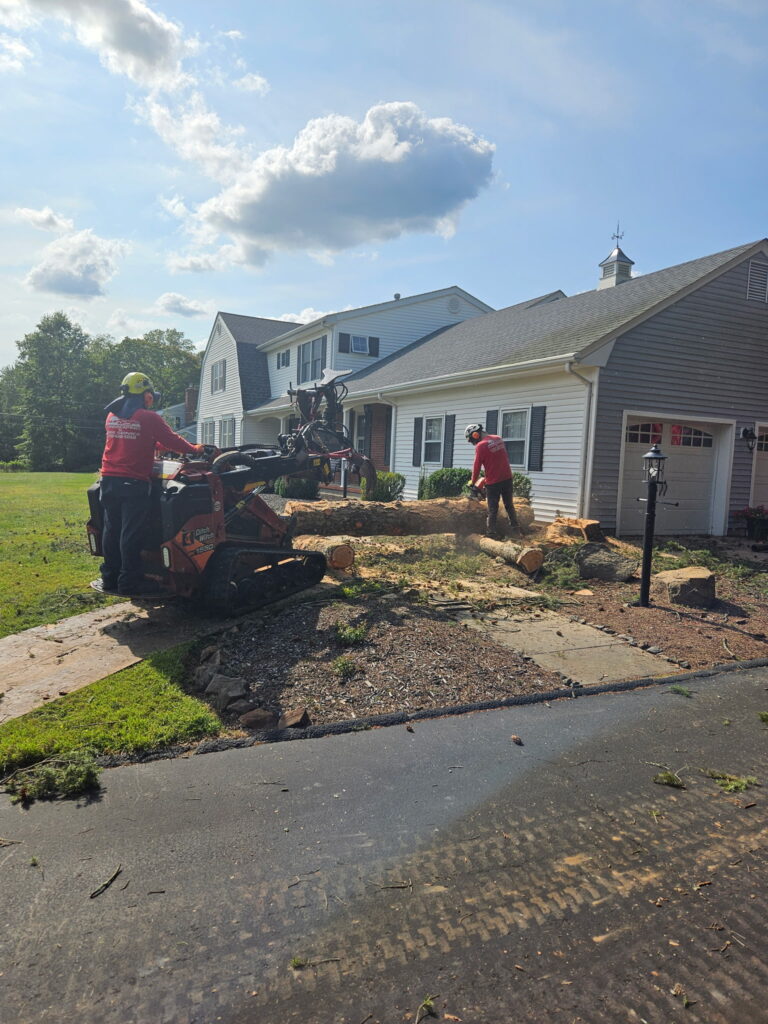
- Felling in sections: On open properties, a tree can sometimes be brought down in large controlled pieces.
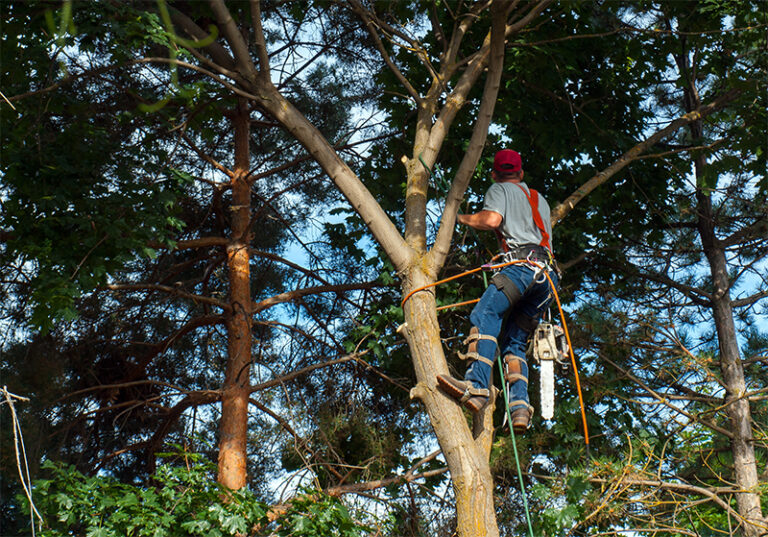
- Climbing and rigging: When a tree stands near a home, fence, or garden, skilled climbers take it down piece by piece and lower each section with ropes and rigging.
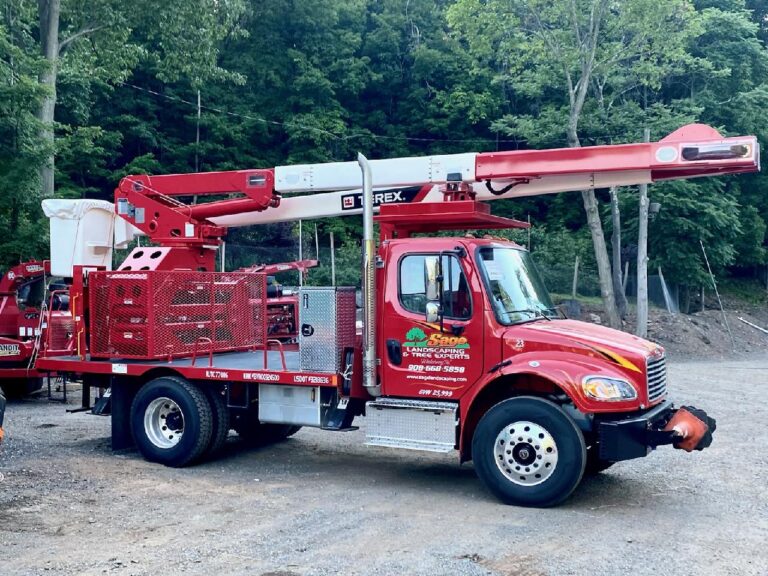
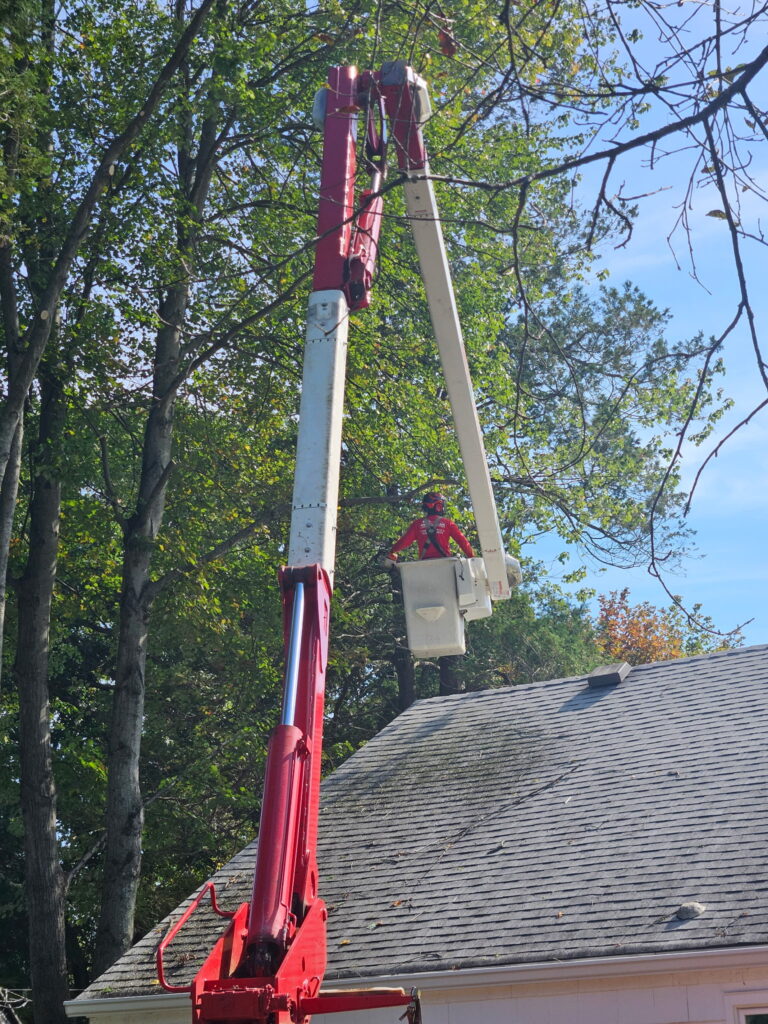
- Aerial lift work: Bucket trucks give our crew safe access to high limbs where it makes sense.
- Crane-assisted removal: For very large or hazardous trees, or trees in tight spaces, a crane lifts sections up and away from your house and landscape.
- Chipping and cleanup: High-capacity chippers process the brush on-site, and we haul away the wood and debris.
Stump Grinding After Removal
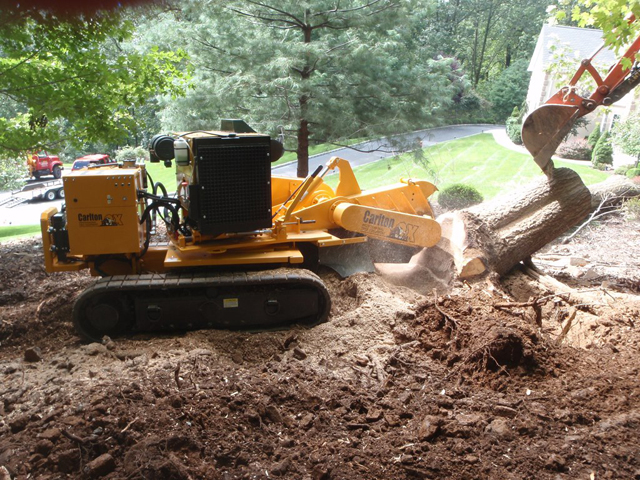
Once a tree is down, the stump can stay, or we can grind it below grade. Stump grinding removes the stump while leaving the roots in place, avoids a large hole to fill, and the grindings can be reused as mulch in your landscape beds.
Service Scenarios: How We Handle Any Situation
Every property is different. Here’s how we approach some of the most common calls we get across Somerset, Union, Morris, Middlesex, and Essex Counties.
Scenario 1: A Large Tree Leaning Toward the House
The situation: A mature oak or maple has started leaning toward the home, and the soil at the base looks raised.
Our approach: We inspect the root zone, trunk, and canopy to see how serious it is. If the tree is unstable, we plan a controlled removal from the top down using rigging or a crane so every piece moves away from the house. Ground crews keep the drop zone clear the whole time.
Scenario 2: Storm Damage After a Nor’easter or Summer Thunderstorm
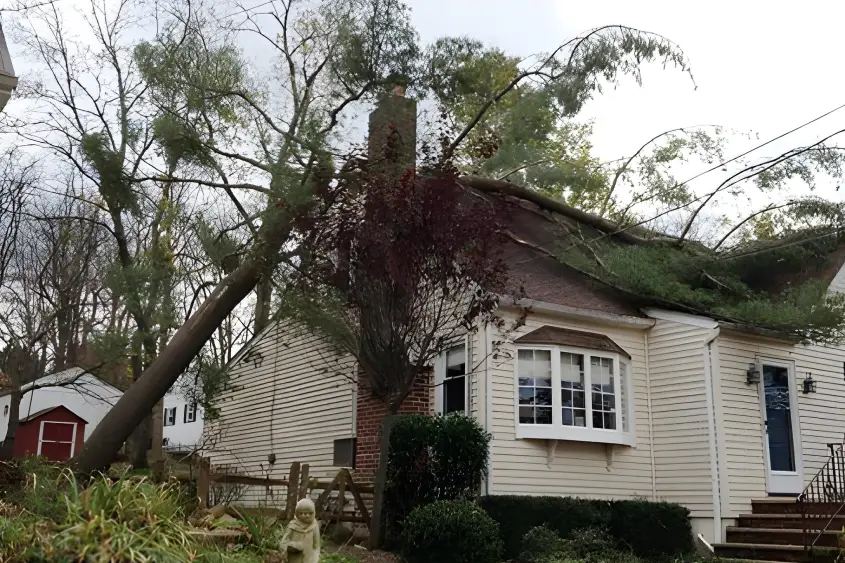
The situation: A tree has fallen on a roof, a car, or across the driveway, or a large limb is hanging in the canopy.
Our approach: Our team is available 24/7 for emergency evaluations. We stabilize the situation, remove the hazardous debris in a safe order, and clear the way for roof and structural repairs to start quickly. We also check the rest of your trees for hidden damage, such as cracked limbs, that could fail in the next storm.
Scenario 3: Branches Rubbing the Roof and Clogging Gutters
The situation: Limbs are scraping shingles, dropping debris into gutters, and giving squirrels an easy path to the attic.
Our approach: Clearance pruning and crown reduction pull branches back to a safe distance while keeping the tree healthy and attractive. No removal needed.
Scenario 4: A Dead or Dying Tree in the Backyard
The situation: A tree didn’t leaf out this spring, the bark is peeling away, or there’s fungus growing at the base.
Our approach: Dead trees get brittle and unpredictable, which makes them more dangerous to climb and cut as time goes on. We assess the tree’s condition and choose the safest removal method, which often means using an aerial lift or crane rather than putting a climber in a weakened tree.
Scenario 5: Tight-Access Backyard with No Room to Drop
The situation: The tree sits between the house, a patio, a pool, and the neighbor’s fence.
Our approach: This is where planning and rigging matter most. We take the tree down in small, controlled sections, lowering each one by rope or lifting it out by crane. We protect lawns, hardscapes, and plantings along the way and leave the yard clean when we’re done.
Scenario 6: Trees Near Power Lines
The situation: Branches are growing into or near the service line to the house, or a tree has fallen onto a utility line.
Our approach: If a tree or limb is touching a power line, stay far away and contact your utility company right away. Lines that look dead can still be live. Once the utility has made the area safe, our crew can handle the tree work on your property that falls outside the utility’s responsibility.
Scenario 7: Preparing for Construction, Additions, or Landscaping
The situation: You’re planning a new addition, driveway, pool, or hardscape, and some trees are in the way or at risk.
Our approach: We help you decide which trees to keep, which to prune, and which to remove, and we schedule the work before construction starts. We can also point out trees whose roots could be damaged by heavy equipment.
Scenario 8: Routine Maintenance for Healthy Trees
The situation: Nothing is wrong, and you want to keep it that way.
Our approach: Seasonal inspections, regular pruning, fertilization, and insect and disease control keep trees strong and catch small problems early, before they turn into costly removals.
Our Safety Protocols
Tree removal can be dangerous when it’s done wrong. Safety guides every decision we make, from the first inspection to the last bit of cleanup.
Before the Work Begins
- On-site risk assessment: We evaluate the tree’s health, structure, lean, and decay, along with nearby structures, utility lines, fences, and landscaping.
- Job planning: We choose the removal or pruning method, rigging points, equipment, and drop zones before any cutting starts.
- Utility awareness: We identify overhead lines and coordinate with the utility when lines are involved.
- Site preparation: We set up work zones and ask homeowners to move vehicles, outdoor furniture, and other items from the area.
During the Work
- Trained, experienced crews: Our field team includes licensed tree experts, certified arborists, and qualified technicians.
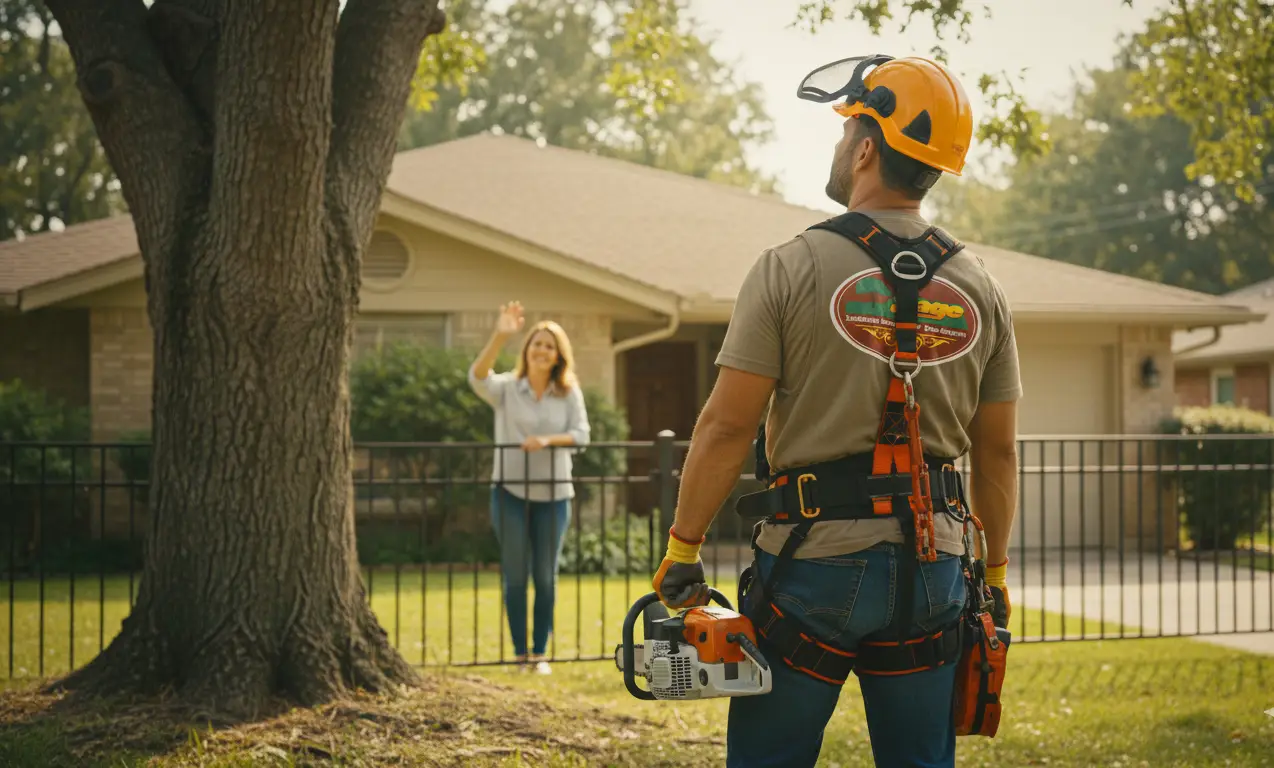
- Personal protective equipment: Helmets, eye and hearing protection, cut-resistant gear, and climbing harnesses are standard.
- Controlled rigging: Ropes, friction devices, and lowering systems control the weight of every section that comes down.
- Professional equipment: Cranes, aerial lifts, and high-capacity chippers that are inspected and maintained.
- Clear communication: Climbers and ground crew keep in constant contact, and the drop zone stays clear of people and pets.
After the Work
- Full cleanup: Branches, wood, and debris are chipped and hauled away, and the area is raked and blown clean.
- Final walkthrough: We review the finished job with you and answer any questions.
- Follow-up recommendations: We let you know if other trees on the property need attention.
Licensed and Insured, Every Time
New Jersey requires tree care businesses to be registered and licensed. Sage Tree Experts is NJ Tree Care Registration #770116, and owner Ed Sage is licensed by the State of New Jersey as a Tree Expert (License #815234). We’re fully insured, so you aren’t carrying the risk. Before you hire any tree company, ask for its license number and proof of insurance.
Our Simple Four-Step Process
- Contact us. Call (908) 402-1323 or fill out our online form to schedule a free visit.
- Property inspection. We assess your trees and talk through your goals, concerns, and options.
- Clear estimate. You get a detailed quote with pricing, timeline, and project scope, with no hidden fees.
- Expert work and cleanup. Our crew completes the job safely and leaves your property clean.
Frequently Asked Questions
How do I know if my tree needs to be pruned or removed?
Look for dead limbs, cracks, cavities, fungus near the base, a new or worsening lean, or roots that are lifting the soil. Many trees just need expert trimming to stay healthy and safe. The best way to know is a professional on-site evaluation. We’ll give you an honest recommendation and won’t push a removal you don’t need.
How much does tree removal cost?
The price depends on the tree’s size, condition, location, and how easy it is to reach, as well as whether a crane or special rigging is needed and whether you want the stump ground. A small, open-yard tree costs far less than a large tree leaning over a house. We provide free inspections and clear written estimates with no hidden fees.
Do I need a permit to remove a tree in New Jersey?
It depends on your town. Many New Jersey municipalities have tree protection ordinances that require a permit for removing trees over a certain trunk size. Check with your local municipality before scheduling a removal, and our team can help you understand what to look for.
What is the best time of year to prune trees?
For many species, the dormant season (late fall through winter) is ideal because the tree is under less stress and its structure is easy to see. Dead, broken, or hazardous branches should be removed as soon as you notice them, in any season.
Do you offer emergency tree service?
Yes. Sage Tree Experts provides 24/7 emergency response for fallen trees, uprooted trees, and storm damage. We dispatch crews and equipment as needed to clear hazards and allow for prompt repairs.
What should I do if a tree falls on a power line?
Stay well away from the tree and the line, keep others away, and call your utility company immediately. Never try to move a tree or limb that’s touching a power line. Once the utility has made the area safe, we can take care of the tree work on your property.
Will you clean up after the job?
Absolutely. Cleanup is part of every job. We chip brush, haul away wood and debris, and leave your property clean.
Do you grind stumps after removing a tree?
Yes. Stump grinding removes the stump below grade while leaving the roots in place, so there’s no large hole to fill. The grindings can be reused as mulch.
Can a storm-damaged tree be saved?
Sometimes. If the main trunk and structure are sound, careful pruning to remove broken limbs and balance the canopy can give the tree a good chance of recovery. If the trunk is split, the top has snapped, or most of the canopy is gone, removal is usually the safer choice.
How often should my trees be pruned?
Most mature trees benefit from an inspection and pruning every three to five years. Young trees do better with more frequent structural pruning. Trees near the home or in high-traffic areas may need more regular checks.
Are you licensed and insured?
Yes. Sage Tree Experts is NJ Tree Care Registration #770116, and owner Ed Sage holds NJ Tree Expert License #815234. We’re fully insured, A+ rated and accredited by the Better Business Bureau, and a longstanding member of the Tree Care Industry Association.
What areas do you serve?
We’re based in Watchung and serve homeowners and property managers throughout Central and Northern New Jersey, including Somerset, Union, Morris, Middlesex, and Essex Counties. That includes Summit, New Providence, Berkeley Heights, Cranford, Fanwood, Springfield, Chatham, Madison, Florham Park, Morristown, Morris Plains, Mendham, Chester, Maplewood, Middlesex, Milltown, Warren, North Plainfield, and nearby towns.
Get Expert Tree Removal and Pruning from Sage Tree Experts
Whether it’s a single overhanging limb, a dead tree in the backyard, or a storm emergency in the middle of the night, Sage Tree Experts has the experience, equipment, and licensed team to handle it safely. For more than four decades, Central New Jersey homeowners have trusted us to protect their homes, families, and landscapes.
Call (908) 402-1323 today or request your free estimate online. Our team will inspect your trees, explain your options, and give you a clear, honest quote.
Sage Tree Experts | P.O. Box 7237, Watchung, NJ 07069 | NJTC Registration #770116 | NJ Tree Expert License #815234