Storm Damage Tree Emergencies | Basking Ridge NJ Tree Care Reveals Response
Storm damage doesn’t just mean fallen trees—even trees that look fine after severe weather can harbor deadly structural failures that strike without warning. What specific signs indicate your Basking Ridge tree is actually a hidden hazard that needs immediate professional attention?
Key Takeaways
- New Jersey homeowners face heightened tree damage risks during nor’easters due to saturated soils that weaken root systems, especially affecting mature oaks and maples with shallow roots
- Emergency tree removal requires licensed professionals under New Jersey’s 2017 tree service regulations, with homeowners potentially liable for injuries from uninsured contractors
- Critical warning signs after storms include blow-overs, crown twists, hanging limbs, and root failures that pose immediate safety threats to property and lives
- Professional emergency response follows a systematic process of safety assessment, hazard removal, and property protection that most homeowners cannot safely handle alone
- Bernards Township’s new 2024 tree ordinance requires permits for most tree removals, though emergency hazard situations may qualify for exemptions
When storms strike Basking Ridge and Somerset County, the aftermath often reveals a landscape transformed by fallen trees, damaged limbs, and hazardous situations that demand immediate attention. Understanding how to respond to tree emergencies can mean the difference between minor property damage and catastrophic loss.
24/7 Emergency Response for Storm-Damaged Trees
Storm-damaged trees create time-sensitive hazards that cannot wait for regular business hours. Emergency tree services operate around the clock because fallen trees blocking driveways, hanging limbs over homes, and root failures near power lines pose immediate threats to safety and property. The window for safe removal narrows quickly as damaged trees become increasingly unstable.
Professional emergency teams prioritize life-threatening situations first, followed by property protection and access restoration. This systematic approach ensures that the most dangerous hazards receive immediate attention while preventing secondary damage from delayed response. Sage Tree Experts provides emergency tree service in Basking Ridge, responding quickly to storm damage throughout Somerset County with certified crews and professional equipment.
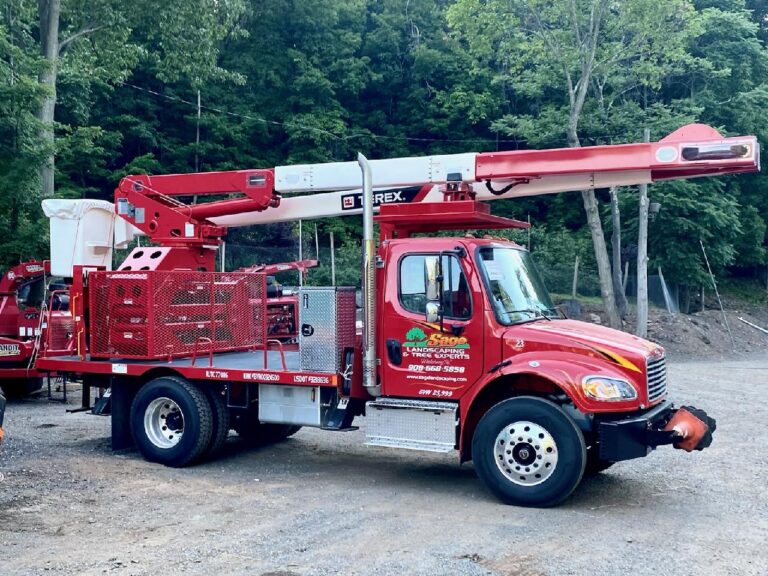
The difference between emergency response and regular tree service lies in the urgency and specialized equipment required. Emergency crews carry chainsaws, rigging equipment, and often crane access to handle complex removals under dangerous conditions that would be impossible for homeowners to address safely.
Why Basking Ridge Trees Face High Storm Risk
Basking Ridge’s mature residential landscape, characterized by large wooded lots and established trees, creates unique vulnerabilities during severe weather events. The area’s combination of soil conditions, tree species, and storm patterns produces a perfect scenario for tree failure.
1. Nor’easters Create Perfect Storm Conditions
Nor’easters regularly impact New Jersey with a devastating combination of strong winds, heavy rain, and wet snow that creates ideal conditions for widespread tree damage. These storm systems can bring sustained winds of 40-60 mph with gusts exceeding 70 mph, forces that even healthy trees struggle to withstand. The October 2021 nor’easter that caused a fatality in Morris Township when a tree limb fell on vehicles demonstrates the lethal potential of these storms.
The March 2018 nor’easter left over 90,000 New Jersey residents without power and closed numerous roads due to downed trees and wires. These storms can persist for several days, giving trees prolonged exposure to destructive forces that gradually weaken structural integrity until failure occurs.
2. Saturated Soils Weaken Root Systems
Heavy rainfall during storms saturates the ground around tree roots, dramatically reducing the soil’s ability to anchor trees upright. Saturated soils lose their structural strength, essentially turning solid earth into mud that cannot support the massive weight and wind load of large trees. This effect is particularly pronounced in areas with clay soils that retain water for extended periods.
When high winds combine with saturated ground conditions, even healthy trees with extensive root systems become vulnerable to uprooting. The phenomenon explains why tree failures often occur during or immediately after heavy rain events, rather than during dry periods with similar wind speeds.
3. Mature Oaks and Maples Can Be Highly Vulnerable, Especially Those with Large Horizontal Limbs or Pre-existing Stress
Basking Ridge’s landscape features numerous mature oak and maple trees that, while beautiful and valuable, present specific storm-related risks. These species often develop large horizontal branches that act like sails during windstorms, creating enormous leverage forces that can snap limbs or topple entire trees. Older specimens with shallow root systems become particularly susceptible to failure.
Trees showing signs of stress before storms face exponentially higher failure rates. Pre-existing conditions such as root damage, pest infestations, disease, or previous storm damage create weak points that storms exploit. Professional assessment can identify these vulnerabilities before they become emergencies.
Critical Warning Signs After Storm Damage
Recognizing dangerous tree conditions after storms requires understanding how different types of damage manifest and progress. Many seemingly stable trees harbor hidden structural damage that can lead to sudden failure days or weeks after the initial storm event.
Blow-Overs and Root Failures
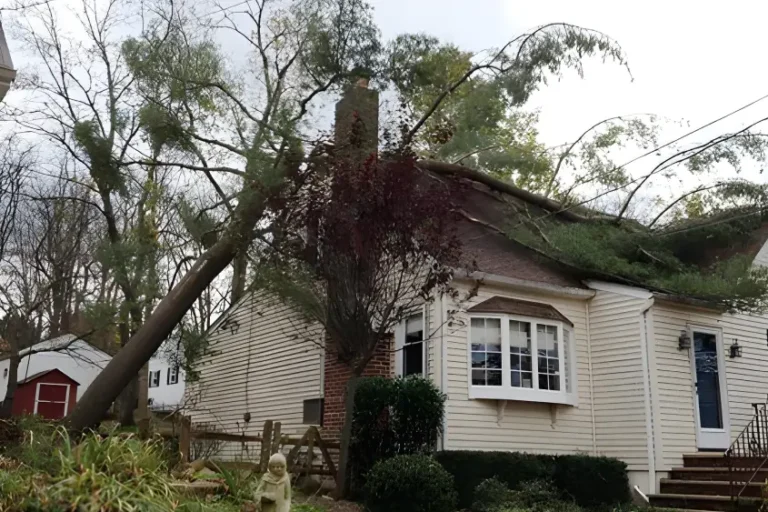
Complete tree blow-overs create obvious hazards, but partial root failures present more subtle dangers. Trees that lean suddenly after storms have compromised root systems that may fail completely without warning. Even slight changes in a tree’s vertical orientation indicate serious structural damage requiring immediate professional evaluation.
Root failures often expose large sections of the root system, creating crater-like depressions around the tree base. These situations are extremely unstable because the remaining roots cannot support the tree’s weight, and secondary failure is almost inevitable.
Crown Twists and Branch Breaks
Crown twists occur when storm winds rotate the tree’s upper canopy relative to its trunk, creating spiral stress fractures that may not be immediately visible. These internal breaks weaken the tree’s overall structure and can lead to catastrophic failure during subsequent wind events.
Partial branch breaks, where limbs remain attached by strips of bark or wood, create extremely dangerous hanging hazards. These “widow makers” can fall without warning, especially when disturbed by wind or additional weight from rain or snow accumulation.
Hanging Limbs Over Property
Storm-damaged limbs hanging over homes, vehicles, or walkways present immediate threats that require professional removal. These situations are particularly dangerous because the limbs may appear secure but are actually held by minimal connections that can fail at any moment.
Homeowners should never attempt to remove hanging limbs themselves, as the unpredictable physics of partially detached branches make them extremely hazardous to handle. Professional crews use specialized rigging techniques to control the fall of damaged limbs safely.
New Jersey’s Strict Tree Service Requirements
New Jersey’s regulatory environment for tree service companies reflects the serious safety risks associated with professional tree work, which ranks among the most dangerous industries globally.
Licensed Tree Expert Mandate
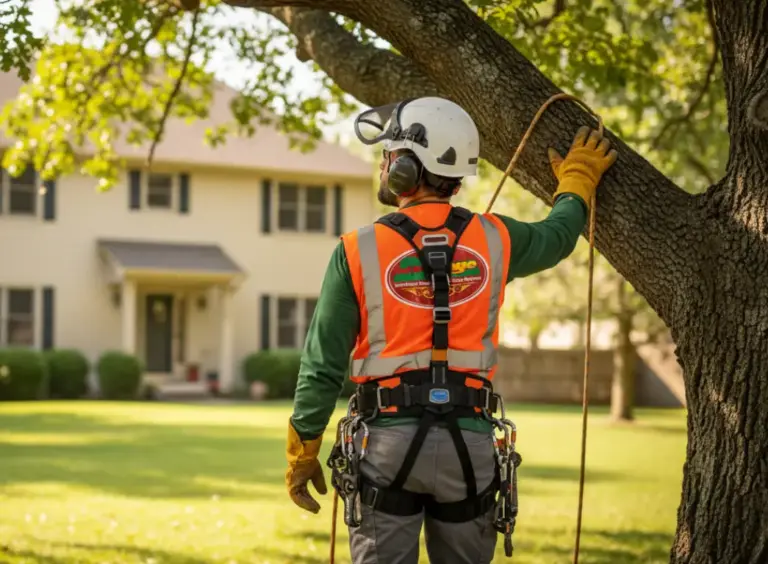
Since April 2017, New Jersey law mandates that tree care companies must be registered with the NJ Board of Tree Experts and employ Licensed Tree Experts (LTE) or Licensed Tree Care Operators (LTCO). Companies must also carry proper liability and workers’ compensation insurance to operate legally in the state.
This licensing requirement ensures that tree service providers possess the technical knowledge and safety training necessary to handle complex and dangerous tree work. Licensed professionals understand proper pruning techniques, rigging procedures, and safety protocols that protect both workers and property during tree operations.
Homeowner Liability Risks
New Jersey homeowners can be held liable for injuries or damages caused by under-insured or uninsured tree care contractors working on their property. This liability extends to both worker injuries and damage to neighboring properties, potentially exposing homeowners to significant financial risk.
Verifying a contractor’s licensing and insurance status before work begins protects homeowners from these liability exposures. Legitimate companies readily provide proof of licensing and insurance, while unlicensed operators often cannot or will not produce proper documentation.
Professional Emergency Tree Response Process
Emergency tree response follows a systematic approach designed to maximize safety while efficiently addressing hazards and restoring property access.
1. Immediate Safety Assessment
Professional crews begin every emergency response with a thorough safety assessment that identifies immediate dangers and establishes safe work zones. This evaluation examines not only the damaged trees but also surrounding hazards such as power lines, structures, and unstable ground conditions.
The assessment determines the safest removal sequence and identifies equipment requirements for the job. Complex situations may require crane assistance, specialized rigging, or coordination with utility companies before work can begin safely.
2. Hazard Removal and Debris Clearing
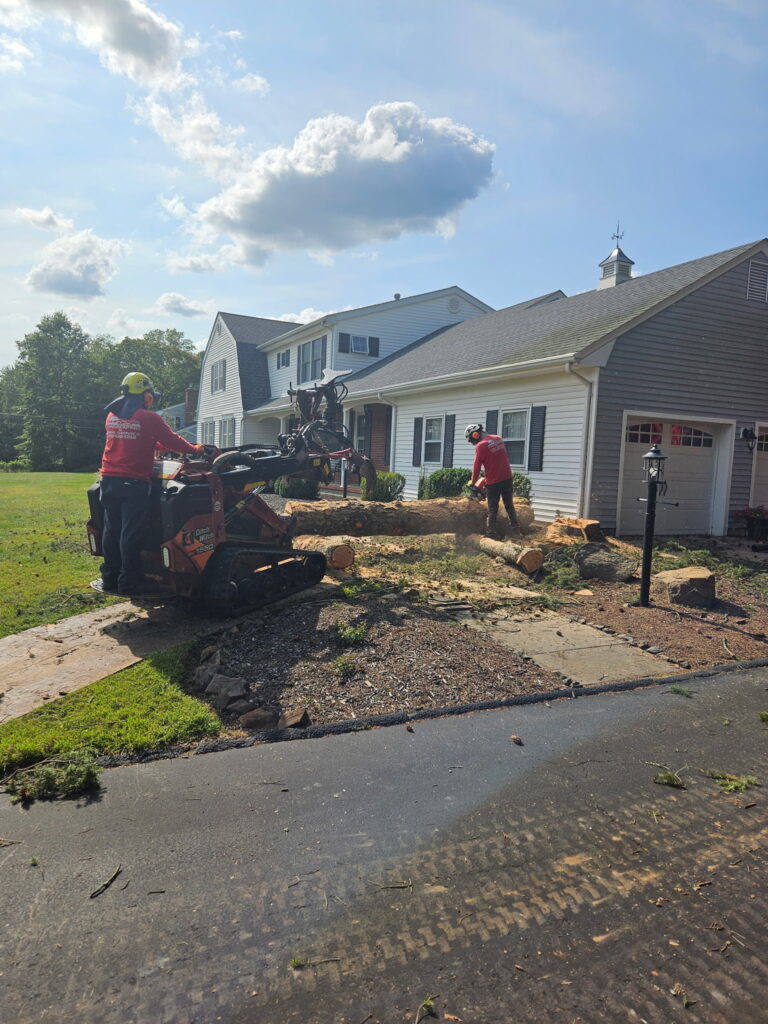
Once safety protocols are established, crews systematically remove the most dangerous elements first, working methodically to prevent secondary hazards. This process often involves careful sectional removal of large trees to control where pieces fall and minimize additional property damage.
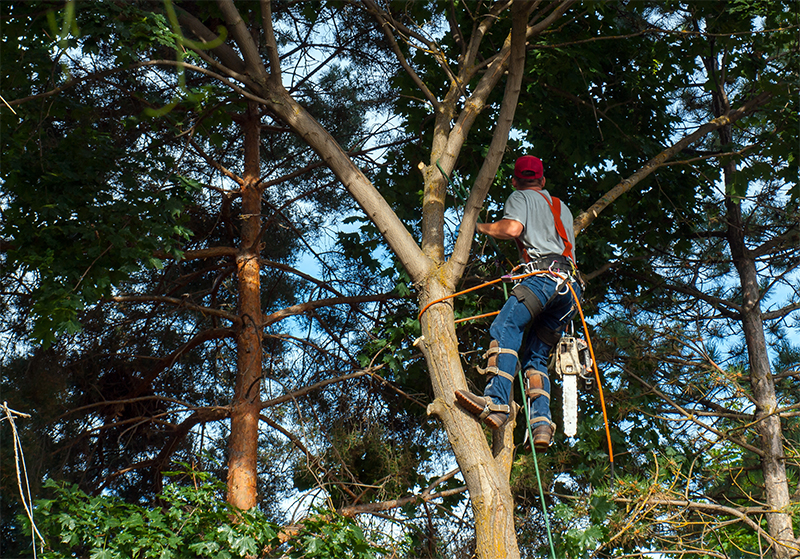
Professional teams use controlled rigging systems to lower heavy branches and trunk sections safely, rather than allowing them to fall freely. This approach protects landscaping, structures, and underground utilities that might be damaged by uncontrolled falling debris.
3. Property Protection During Removal
Experienced crews take extensive measures to protect existing landscaping, driveways, and structures during emergency tree removal. This includes using protective barriers, strategic equipment placement, and careful debris management to minimize collateral damage.
Property protection becomes especially critical during emergencies when homeowners are already dealing with storm damage. Professional companies understand that additional property damage from careless tree removal can compound the homeowner’s losses and stress.
Local Basking Ridge Tree Ordinance Impacts
Bernards Township, which includes Basking Ridge, adopted a new tree ordinance in June 2024 that significantly impacts tree removal decisions for local homeowners. The ordinance requires permits for the removal of most street and non-street trees above specified diameter thresholds and often mandates replacement plantings or fees.
However, the ordinance includes provisions for emergency situations involving hazard trees that pose immediate threats to safety or property. These emergency exemptions recognize that dangerous trees cannot wait for the permit process during life-threatening situations. Homeowners should document storm damage with photographs and professional assessments to support emergency removal decisions under the ordinance.
The new regulations also emphasize the importance of working with qualified professionals who understand both the technical requirements for safe tree removal and the legal requirements for compliance with local ordinances. Professional tree service companies can guide homeowners through the permit process for non-emergency situations while ensuring immediate response capability for genuine emergencies.
Sage Tree Experts Delivers Rapid Storm Response for Somerset County
Professional emergency tree services understand the unique challenges that local homeowners face during severe weather events. Established companies maintain specialized equipment, trained crews, and emergency response capabilities specifically designed to address the storm damage patterns common to the region.
Local expertise matters significantly during emergency response because experienced crews understand regional tree species, soil conditions, and typical failure patterns that influence removal strategies. This knowledge enables faster, safer, and more effective emergency response when every minute counts for protecting property and restoring access.
The combination of proper licensing, insurance coverage, professional equipment, and local experience creates the foundation for reliable emergency tree service that homeowners can trust during their most stressful moments. When storm damage strikes, having access to established professionals with proven track records provides the peace of mind that emergency situations will be handled safely and effectively.
For professional emergency tree services and tree care in Basking Ridge and Somerset County, contact Sage Tree Experts for licensed, insured tree service.